research
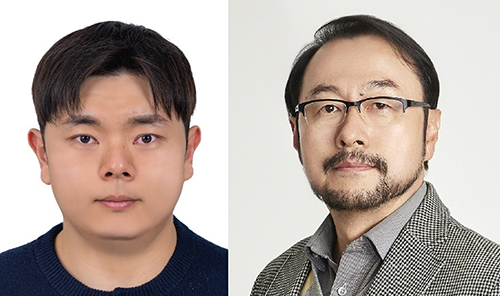
< (From left) KAIST Dr. Changjin Seo, Professor Sangyong Jon >
A breakthrough technology has been developed to overcome the limitation where stem cells fail to survive for long periods in the body, even when administered in large quantities. Stem cells are vital for regenerating damaged tissues or recovering injured areas. A KAIST research team has successfully enhanced both the survival rate and therapeutic efficacy of these cells by developing a 3D culture technology that precisely designs the cellular microenvironment. This achievement is expected to transcend the current limits of stem cell therapy and reshape the landscape of regenerative medicine.
On April 29th, the research team—led by Professor Sangyong Jon from the Department of Biological Sciences and featuring researchers Changjin Seo, Dohyeon Kim, Junhyuk Song, Sun-Young Kim, Youngju Son, and Afia Tasnim Rahman—announced the development of a novel culture technology to grow healthier stem cells. The team implemented a 3D platform by applying a polymer matrix (an artificial structure coating the culture substrate) to an "artificial floor" that mimics the natural in vivo environment. On this platform, they cultured human adipose-derived stem cells (hADSCs) in three dimensions, confirming a dramatic improvement in cellular function and therapeutic impact.
Human adipose-derived stem cells have been favored for clinical use due to their ease of harvest, high proliferation, and low immune rejection. However, traditional 2D (planar) culture methods cause cells to age and lose function over time. Previous 3D methods, such as forming cell aggregates (spheroids), also faced hurdles in maintaining long-term survival and functionality within the body.
To solve this, the research team developed a densely cross-linked synthetic polymer material composed of siloxane (a biocompatible polymer of silicon and oxygen), named "poly-Z."
This material modifies the physicochemical properties of the culture substrate to promote the adsorption of albumin proteins found in the culture medium. As a result, cells do not adhere to the floor but instead self-assemble into 3D spheroid structures. These spheroids showed increased production of the extracellular matrix (ECM), creating an environment highly similar to the human body and demonstrating performance far superior to conventional methods.
Experimental results showed that stem cells cultured on the poly-Z platform exhibited enhanced differentiation potential and immunomodulatory functions, with a significantly increased survival time inside the body.

< Schematic of hADSC Spheroid Formation on the Synthetic Polymer Matrix, Poly-Z >
Notably, in animal models of acute colitis and acute liver injury, this method showed significantly higher therapeutic efficacy than conventional methods. This suggests that even with the same dosage, the cells live longer and act more vigorously. The team confirmed that the activation of integrin and FAK signaling pathways—the mechanisms through which cells sense and respond to their environment—strengthened the stem cells' functions, allowing them to better perceive their surroundings and perform more effectively after transplantation.
Professor Sangyong Jon stated, "This research proves that a precisely engineered synthetic polymer-based 3D environment can simultaneously enhance the function and therapeutic efficacy of stem cells. We expect this to be widely utilized in developing next-generation cell therapies for various incurable diseases, including inflammatory conditions."
The study, with Dr. Changjin Seo from the KAIST InnoCORE AI-Drug Discovery Center as the lead author, was published online on March 31 in the international journal Advanced Science (Impact Factor: 14.1).
- Paper Title: Polymer Matrix-Based 3D Culture Significantly Enhances the Differentiation and Immunomodulatory Functions of Human Adipose-Derived Stem Cells
- DOI: https://doi.org/10.1002/advs.202518704
This research was supported by the Korea Multi-Ministry Regenerative Medicine Project, the KAIST InnoCORE Program, and the Leader Research Grant of the National Research Foundation of Korea.
-
research KAIST Reveals Principle Behind Ultra-Fast DNA Repair, Like “Finding a Needle in Seoul”
<(From Upper Left) Professor Ja Yil Lee, Professor Gwangrog Lee, Professor Jejoong Yoo, (From Bottom Left) Ph.D candidate Subin Kim, Dr. Donghun Lee, Ph.D candidate Gyeongpil Jo> DNA is the blueprint of the human body. However, tens of thousands of DNA lesions occur in our bodies every day. In particular, if “apurinic/apyrimidinic sites” (AP sites, damaged sites where one letter of DNA information has been erased) are not properly repaired, they can lead to cancer and aging.
2026-06-04 -
research Fatty Acid in Body Acts as Natural Brake Suppressing Cancer Cell Growth
< (Left) Professor Seyun Kim from KAIST, (Right) Professor Young-Joo Byun from Korea University > 'mTOR', a protein in our body, becomes excessively activated in cancer cells, promoting cell growth and metastasis. Korean researchers have discovered for the first time in the world that '13-HODE'—a substance produced when fatty acids, which are abundant in vegetable oils, are metabolized in the body—binds directly to mTOR and acts as a 'natural brake' that suppresses cancer c
2026-06-04 -
research KAIST Develops New Catalyst Design Technology to Improve Battery and Hydrogen Fuel Cell Performance
<(From Left) Professor Seung Jun Hwang, Professor Jaeyune Ryu> Korean researchers have developed a new catalyst design technology that can improve the performance of batteries and hydrogen fuel cells while reducing energy loss. KAISTannounced on the 1st of June that a research team led by Professor Seung Jun Hwang of the Department of Chemistry, through joint research with Professor Jaeyune Ryu’s team from the Department of Chemical and Biological Engineering at Seoul National
2026-06-01 -
research KAIST Produces Eco-Friendly Core Nylon Precursors Used from Clothing to Automobiles with Microbes
<(From Left) Dr. Da-Hee Ahn, Distinguished Professor Sang Yup Lee> Nylon is a representative plastic material used throughout our daily lives, from clothing to automobiles. However, most of its raw materials have been produced through petrochemical processes, resulting in large carbon emissions. KAIST researchers have developed a technology that can produce key nylon precursors in an eco-friendly way using microbes. KAIST (President Kwang Hyung Lee) announced on the 31st of May that a
2026-06-01 -
research "Development of 'ADvisor', an AI that Predicts Instagram Advertising Performance in Advance"
<(Bottom from left) M.S candidate Gyurim Hwang, M.S candidate Yeongho Kim, Ph.D. candidate Kyungho Kim, Ph.D.candidate Jongha Lee, M.S candidate Yeonje Choi (Top from left) Undergraduate student Sejin Chung, Researcher Hongseok Lee, Researcher Myeong Ho Song, Ph.D. candidate Sunwoo Kim, M.S candidate Juyeon Kim, Professor Kijung Shin> Social media advertising usually requires running multiple ad drafts in practice before determining which ad is effective. Because of this, testing adver
2026-06-01